If flat brown marks have built up on your face, you will want to know whether they can fade. Sun spots, also called age spots, liver spots or solar lentigines, are flat brown patches that build up after years of sun exposure. They are harmless and are often one of the more responsive types of pigmentation, so they can usually be faded noticeably. At ZARA we treat them with our Pigmentation treatment, at £159 for a 1 hour appointment.
Before anything is treated, each spot is examined carefully. A skin cancer such as melanoma can sometimes pass for a harmless brown mark, so we only treat spots that are clearly suitable, and nothing that is undiagnosed. If a mark is new, changing, bleeding or irregular, it must be checked by a GP or dermatologist first.
The consultation at 304 Edgware Road, London W2 is free, and it is where we tell you whether your spots are suitable and what a plan would cost.
Which spots need a doctor's check before treatment?
Before any cosmetic treatment, have a spot or mole seen by your GP or a dermatologist before you book if it:
- Has appeared recently, particularly if you are over 30
- Is growing, or changing in shape or colour
- Has a ragged or uneven border, or several shades within it
- Bleeds, itches, crusts or does not heal
- Looks unlike your other spots and moles
Doctors often use the ABCDE checklist: asymmetry, border, colour, diameter and evolving, meaning change over time. A spot that raises any of these points is a reason to be checked, not treated. Where we are unsure at consultation, we stop and ask you to get a medical opinion first.
What are sun spots and age spots?
Sun spots form where years of ultraviolet light have pushed pigment cells to make extra melanin in one small area. They tend to appear where the skin sees the most sun: the face, the backs of the hands, the chest and the shoulders. They become more common from middle age, which is where the name age spots comes from, but people who spend a lot of time outdoors can notice them earlier.
They are usually flat, oval and light to dark brown, with a clear edge. Freckles fade in winter and darken in summer, while sun spots tend to stay through the year. Melasma, marks left by acne and freckles can look similar at first glance, and each needs a different approach, so working out which you have comes first.
How are sun spots treated at ZARA?
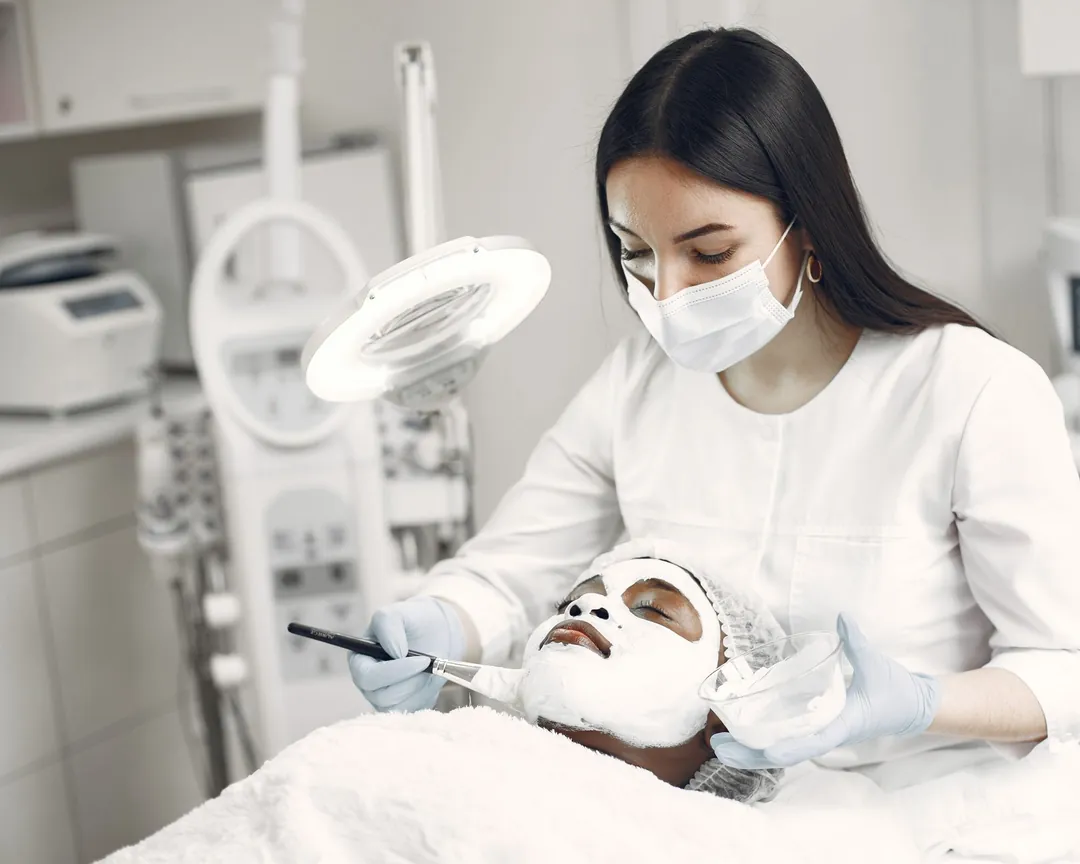
Sun spots are treated through our Pigmentation treatment, a 1 hour appointment at £159. After assessment, the method is chosen for your skin and the depth of the pigment, and may be laser, a chemical peel, a carbon laser peel or a treatment built around a facial. If you have more widespread uneven tone as well, the 2 hour Pigmentation facial at £175 may suit better.
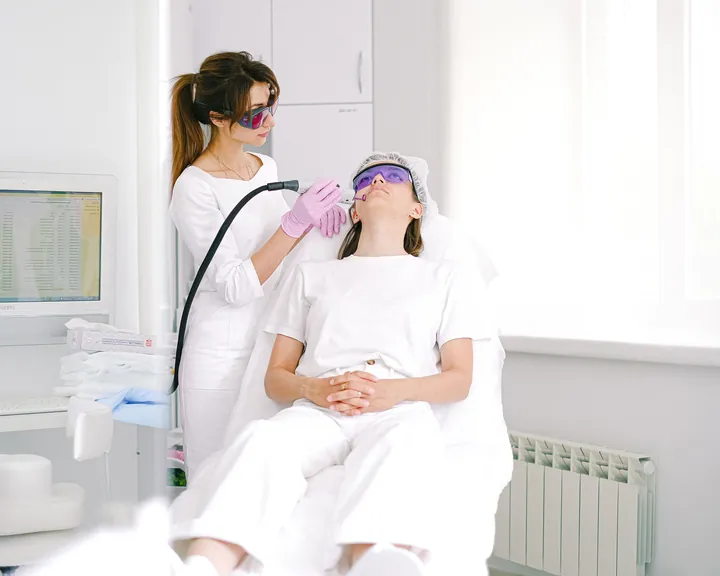
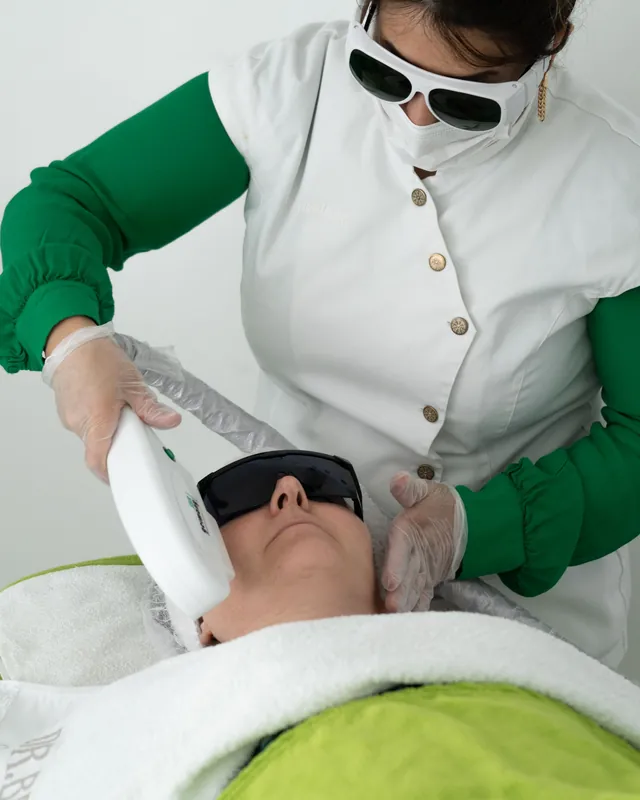
When a laser is used, your eyes are protected throughout. Treated spots often turn darker or slightly crusty for a short time before they fade, which is part of the normal response.
Well-defined spots can need fewer sessions than other kinds of pigment. Wider or deeper pigmentation may need a course, often somewhere between three and six visits a few weeks apart, and some marks lighten only partly.
What about other dark spots on the face?
Not every dark spot is a sun spot. Flat brown marks left once a spot has healed, known as post-inflammatory hyperpigmentation, often fade by themselves over months and can be helped along once breakouts are under control. Larger symmetrical patches on the cheeks or upper lip may be melasma, which needs a gentler plan. Raised spots, rough or scaly patches and anything with a changing surface are not for cosmetic treatment until a doctor has seen them.
Who should wait before sun spot treatment?
Treatment is not suitable right now if you:
- Have a tan or sunburn, or have used a sunbed recently
- Are pregnant or breastfeeding, as lasers and some peels are avoided
- Take a medicine that makes skin sensitive to light, such as certain antibiotics, or have taken isotretinoin in the last six months
- Have cold sores, infection or broken skin on the area
- Have a history of keloid scarring
- Have any spot that is undiagnosed or changing
Medium and darker skin tones can be treated, but there is a higher chance of a new dark mark forming afterwards, so we use gentler settings and may suggest a test patch first.
How do you stop sun spots coming back?
Fading a spot does not stop the sun making new ones, and a treated area can darken again with unprotected exposure. To protect the result:
- Use SPF 30 to 50 daily on your face, and on your hands and chest when they are exposed
- Reapply whenever you spend time outdoors
- Avoid sunbeds and strong midday sun, and wear a hat in summer
- Keep skincare gentle for a few days after each session, skipping scrubs, retinoids, exfoliating acids, saunas and hot yoga
Good sun protection matters for your health as much as your skin tone, since it also lowers the risk of skin cancer.
Close to Marylebone, Marble Arch and St John's Wood
ZARA is at 304 Edgware Road, about 50 metres from Edgware Road Bakerloo line station and around 9 minutes on foot from Marylebone station. From Marble Arch it is a straightforward walk north up Edgware Road, and from St John's Wood station most people take about 25 minutes. Appointments run until 8pm from Monday to Saturday, with Sunday and bank holiday hours of 1pm to 5pm.
Book a free consultation to have your spots assessed, using our booking form, WhatsApp on 07479 973309 or a call to 020 4619 8781.
Sun spot removal: your questions answered
Can sun spots be removed for good?
They can often be faded a great deal, and a faded spot may stay that way with careful sun protection. Nobody can promise it will not return, and new spots can still form on sun-exposed skin.
How much does sun spot removal cost?
Our Pigmentation treatment is £159 for a 1 hour session. If you need a course, or the 2 hour Pigmentation facial at £175 suits you better, we confirm the plan and total cost at your free consultation.
Are sun spots dangerous?
True sun spots are harmless. The concern is that some skin cancers can resemble them at first, which is why any spot that is new, changing, bleeding or irregular should be checked by a doctor before cosmetic treatment.
Do you treat moles?
No. We do not treat moles or any lesion that has not been diagnosed. If a mole is new or changing, please see your GP or a dermatologist.
Will the spot look darker after treatment?
It can, briefly. Treated sun spots often darken or form a light crust for a few days before fading. Leave it alone and keep it protected from the sun while it settles.
How many sessions will my sun spots need?
Well-defined spots can need fewer sessions than other pigment, while others need a short course a few weeks apart. We give you an estimate once we have seen the spots.
Does sun spot treatment hurt?
It is usually well tolerated. With a laser you feel quick, warm snaps on the skin, and a peel may tingle or sting briefly. Tell us if you want to pause.