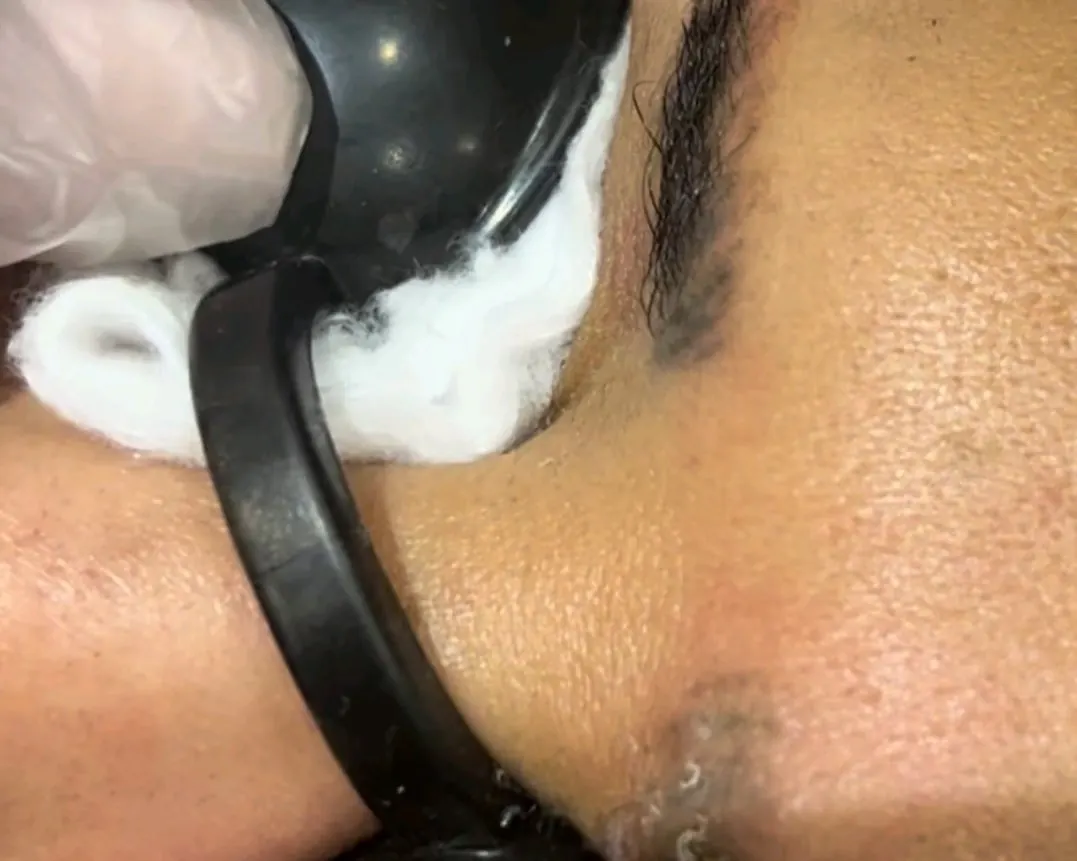
Laser tattoo removal in London uses short, intense pulses of light to break tattoo ink into tiny particles, which the body then clears gradually over the following weeks. At ZARA, 304 Edgware Road, London W2, we treat body tattoos and cosmetic eyebrow tattoo, such as faded microblading or powder brows. It suits people who want a tattoo gone or lightened enough for a cover-up. Most tattoos need a course of sessions spaced six to eight weeks apart, and complete removal cannot be promised for every tattoo. The price depends on the size and colours of the tattoo and how many sessions it is likely to need. It is assessed and confirmed at your consultation.
How laser tattoo removal works
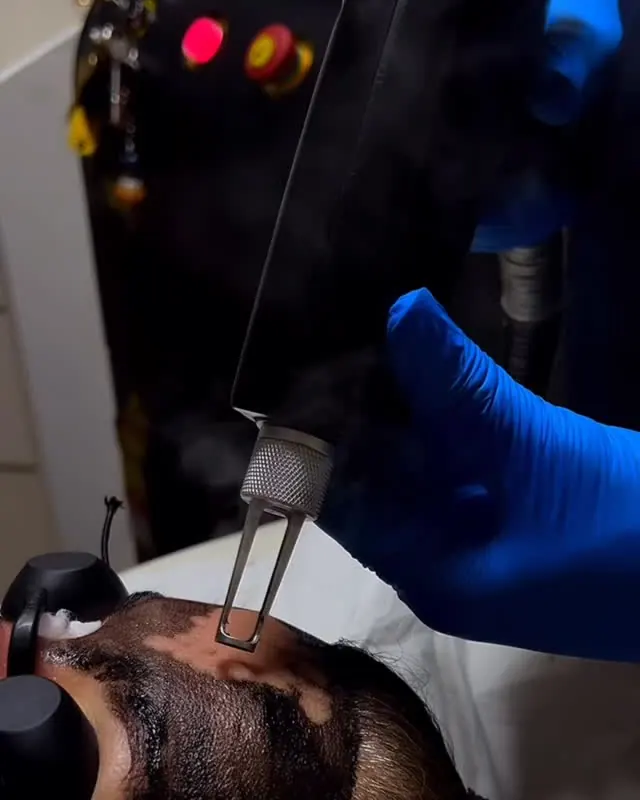
Tattoo ink sits in the dermis as particles too large for the body to remove by itself. We use a laser designed to break up tattoo ink. Its very short pulses shatter those particles into smaller fragments without cutting the skin.
Over the following weeks, the immune system carries the fragments away, and the tattoo fades between visits. That is why the gap between sessions matters as much as the session itself. Most of the fading happens at home, while the skin and lymphatic system do their work.
Each pulse targets ink of particular colours, so the way a tattoo responds depends on the inks used, how deep they sit and how densely they were applied.
Eyebrow and cosmetic tattoo removal
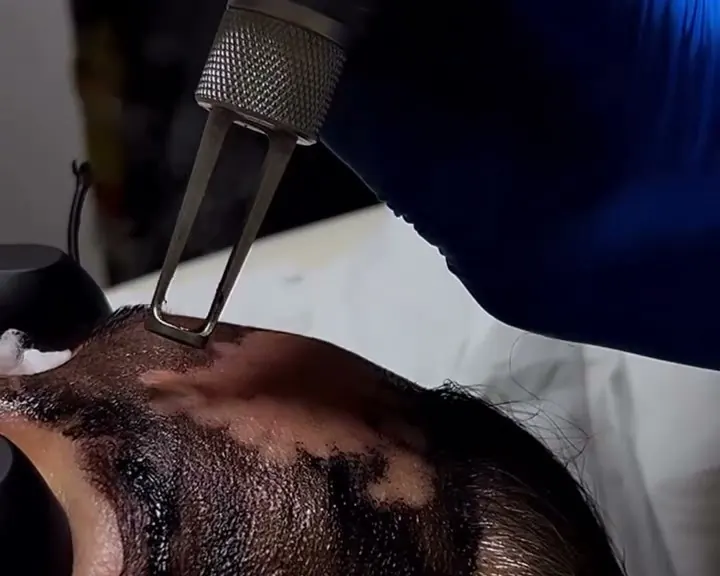
Semi-permanent brow work, including microblading and powder brows, can fade to grey, blue, orange or pink, or simply end up in the wrong shape. Laser can lighten or clear this pigment so you can let your natural brows grow back or start again with a new artist.
Treatment near the eyes needs extra care. Protective eye shields are placed before any laser is used on the brows, and the hairs themselves are assessed beforehand.
Cosmetic inks need particular caution. Pigments containing white, flesh-toned or some red ingredients can darken when hit by laser, sometimes turning grey or black. For this reason we usually test a small area first and review it before treating the whole brow. If cosmetic tattoo elsewhere on the face, such as lip liner, is the concern, we will assess whether laser is appropriate at all.
Which tattoos respond well, and which are harder?
Results vary a great deal, and an honest assessment at consultation is the most useful starting point. As a general guide:
- Black and dark blue ink usually respond best.
- Red, orange and purple often fade reasonably well over a course.
- Green, light blue and yellow are usually harder to shift.
- White and skin-tone inks are difficult and can darken.
- Amateur tattoos often clear faster than professional ones, which tend to hold more ink.
- Tattoos on the hands, feet and lower legs can fade more slowly, as circulation there is lower.
Very colourful or very large tattoos may not suit laser removal, or may only lighten partly. If we think that is likely, we will tell you before you commit.
Who should wait or choose another option
Every treatment starts with a medical history check. Laser tattoo removal is not suitable at the moment for anyone with:
- Pregnancy or breastfeeding
- An infection, open wound, cold sore or active skin condition in the area
- A recent tan, sunbed use or fake tan on the skin to be treated
- Medication that makes the skin sensitive to light, which you should check with your GP or pharmacist
- A history of keloid or raised scarring
If a mole, raised patch or changing mark sits inside the tattoo, have it checked by your GP or a dermatologist first. Laser should not be used over any mark that has not been assessed.
How many sessions will I need?
Most tattoos need a course rather than one visit. Six to twelve sessions is common, and some dense or colourful tattoos need more. Small amateur tattoos and older faded brow work can sometimes clear in fewer.
Sessions are usually spaced six to eight weeks apart, so a full course often runs for a year or longer. Booking closer together does not speed things up and can irritate the skin.
Complete removal is not guaranteed. Some tattoos leave a faint ghost or shadow, or a slight change in skin tone. If you plan to cover the tattoo with new work, a shorter course to fade it is often enough. We review the fading at each visit and adjust or stop the plan when the gains level off.
What happens during and after a session
Your first visit begins with a consultation. We look at the tattoo, ask about its age and inks, and take photographs to track fading.
- The skin is cleansed, and eye protection is put on. For brow work, protective shields cover the eyes.
- The laser is passed over the tattoo. Most people describe it as a sharp snapping, like an elastic band against the skin.
- The skin is cooled and a dressing applied where needed.
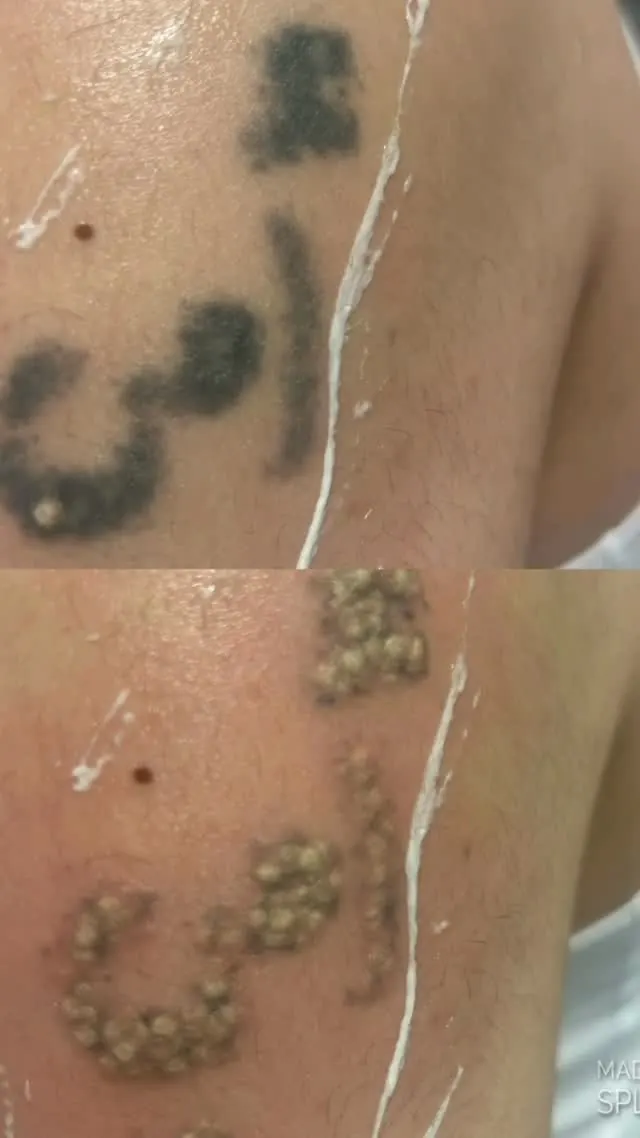
The treated area often turns white straight away. This is called frosting and usually settles within about half an hour. Over the next days, redness, swelling, blistering and scabbing are common and are a normal part of healing.
Aftercare, side effects and risks
Good aftercare lowers the chance of problems. Keep the area clean and dry, and follow the dressing advice you are given. Do not pick scabs or burst blisters. Avoid swimming, saunas, steam rooms and hot baths until the skin has fully healed, and protect the area with high-factor SPF for the whole course.
Temporary lightening or darkening of the skin is fairly common, particularly in darker skin tones, and usually settles over months. Less often, there can be infection, lasting texture change or scarring. Seek medical advice if the area becomes hot, increasingly painful or produces pus. If pigment changes linger once the tattoo is gone, our pigmentation treatment page explains what can help.
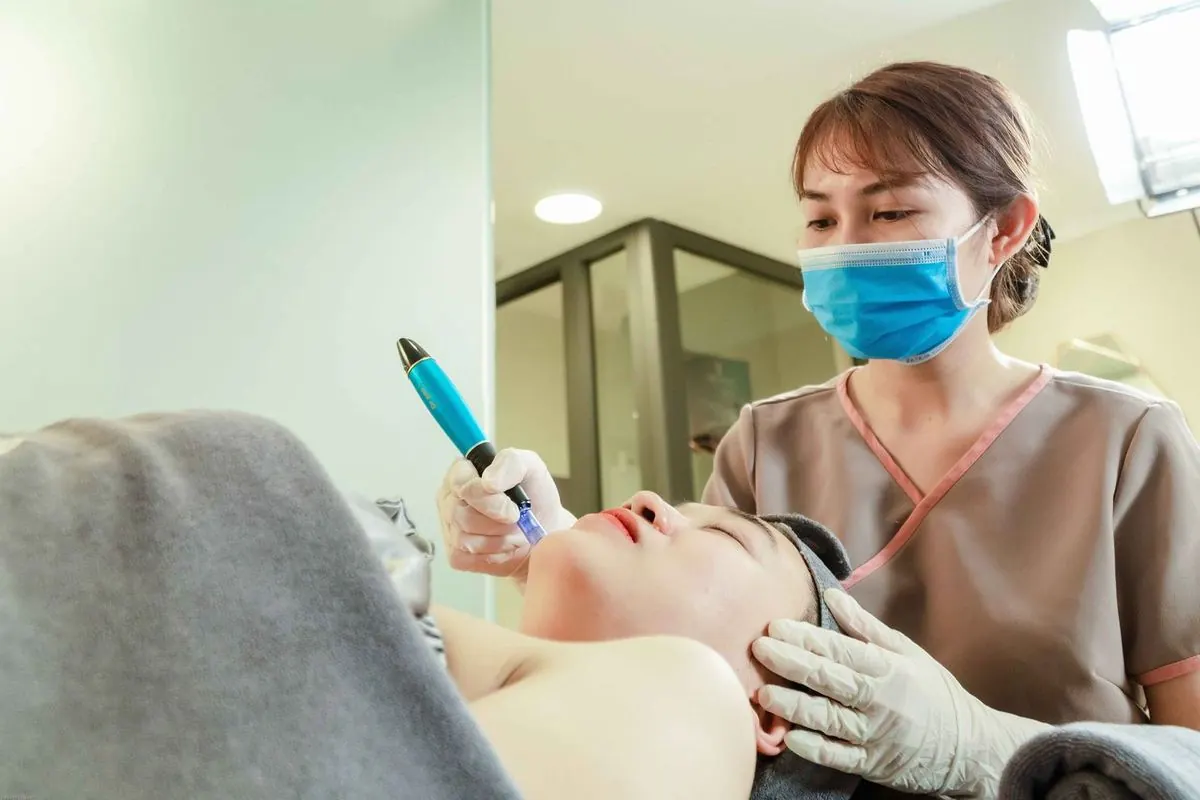
Some people return for other laser work, such as laser hair removal or a carbon laser peel. Faint textural marks are sometimes discussed alongside microneedling, once the skin has settled.
Tattoo removal prices at our Edgware Road clinic
There is no single price for tattoo removal, because a palm-sized black tattoo and a full-colour half sleeve are very different jobs. The cost depends on the size of the area, the colours involved and how many sessions we expect it to need.
At consultation we give you a per-session price and an honest estimate of the course, including when partial fading is the likely outcome. Your final plan and price are confirmed before any treatment starts.
Getting here from Paddington, Marylebone and Maida Vale
Our clinic at 304 Edgware Road is about 50 metres from Edgware Road's Bakerloo line station. The Circle, District and Hammersmith & City lines are a 2 to 3 minute walk away on Chapel Street. From Paddington it is roughly a ten-minute walk, and Marylebone is just across the road to the east. Maida Vale is one stop north on the Bakerloo line.
With sessions spaced weeks apart, it helps that we are open 10:30am to 8pm Monday to Saturday and 1pm to 5pm on Sundays and bank holidays. Book by WhatsApp on 07479 973309, by phone on 020 4619 8781 or through our booking form.
Tattoo removal: your questions answered
Does laser tattoo removal hurt?
Most people describe a sharp snapping, similar to an elastic band flicked against the skin. Sessions are short, often only a few minutes for a small tattoo. Cooling is used, and we can pause whenever you need to.
Can you remove microblading or powder brows?
Often, yes. Laser can lighten or clear cosmetic brow pigment, with protective eye shields in place. Some cosmetic inks darken under laser, so we usually treat a small test area first and check the result before going further.
Will my tattoo be completely gone?
Many tattoos fade a great deal, but complete removal cannot be guaranteed. Some leave a faint shadow or slight change in skin tone. We will give you a realistic view at consultation based on the colours, size and age of the tattoo.
Can I fade a tattoo for a cover-up?
Yes. Fading a tattoo before new work gives your tattoo artist more freedom with design and colour, and it usually needs fewer sessions than full removal. Check with your artist how light they need it to be.
Why does my skin turn white after treatment?
This is called frosting. It happens as the laser reacts with the ink and usually settles within about half an hour. Blistering and scabbing over the following days are also normal parts of healing, so leave them to heal on their own.
Can I have tattoo removal if I have a tan?
It is better to wait. Tanned skin, including fake tan, increases the risk of burns and pigment changes. Let the tan fade fully before your session, and keep the area out of the sun throughout your course.
How long should I wait between sessions?
Usually six to eight weeks, and sometimes longer. The body needs that time to clear the broken-up ink and for the skin to heal. Treating sooner does not fade the tattoo faster and adds to the risk of irritation.